

Aauthor Name : Mohd Zaki , Published on : Thursday 21st of May 2026 04:23:36 PM
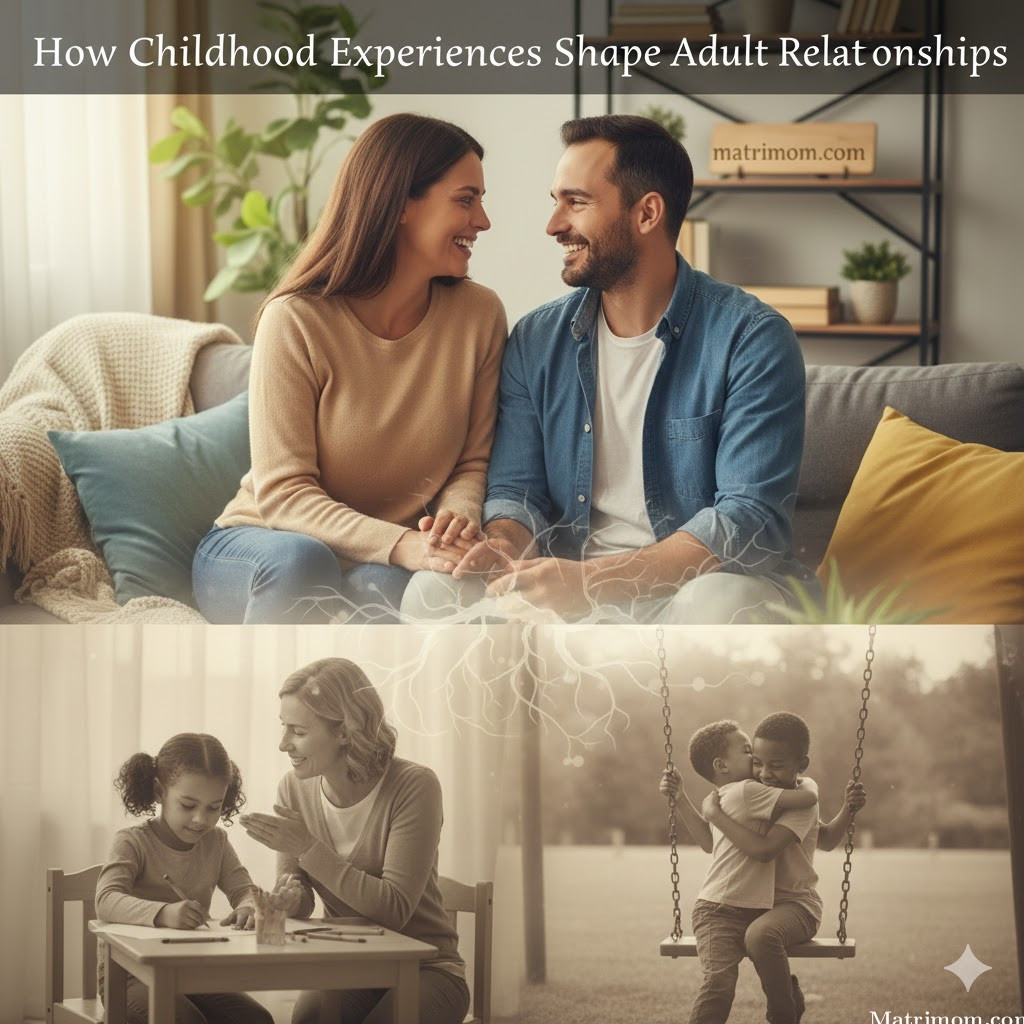
Childhood experiences play a powerful role in shaping how individuals think, communicate, trust, and connect in adult relationships. The emotional environment people grow up in often influences their attachment style, emotional needs, communication habits, and expectations from love and marriage.
At matrimom.com, we believe that understanding emotional patterns and personal experiences helps individuals build healthier, stronger, and more meaningful relationships.
Childhood teaches people how relationships work.
Experiences with parents, caregivers, and family environments often shape:
✔ Emotional security
✔ Communication habits
✔ Trust levels
✔ Conflict handling
✔ Self-confidence
These early emotional lessons can continue influencing adult relationships later in life.
Psychologists often explain relationships through attachment styles developed early in life.
Common attachment styles include:
✔ Secure attachment
✔ Anxious attachment
✔ Avoidant attachment
✔ Fearful attachment
These patterns affect how individuals respond to love, emotional closeness, and commitment in adulthood.
Children who grow up in emotionally supportive environments often develop healthier relationship habits.
Positive experiences encourage:
✔ Trust in others
✔ Healthy communication
✔ Emotional confidence
✔ Better conflict resolution
✔ Comfort with intimacy
Supportive childhood experiences help individuals feel safer in adult relationships.
Stressful or emotionally difficult childhood environments may influence adult emotional behavior.
Examples include:
✔ Fear of abandonment
✔ Difficulty trusting others
✔ Emotional withdrawal
✔ Insecurity in relationships
✔ Fear of vulnerability
Understanding these patterns helps individuals heal and improve relationship health.
The way families communicate strongly affects adult communication styles.
Childhood experiences may influence:
✔ How openly someone expresses emotions
✔ Comfort with difficult conversations
✔ Listening habits
✔ Reaction during arguments
✔ Emotional expression
Healthy communication can be learned and improved over time.
People often unconsciously carry relationship expectations from childhood into adulthood.
This may affect:
✔ Views on marriage
✔ Trust and loyalty expectations
✔ Family involvement preferences
✔ Emotional dependence
✔ Conflict management
Recognizing these expectations helps couples communicate more clearly and realistically.
Past experiences do not define the future permanently.
Healthy growth involves:
✔ Self-awareness
✔ Emotional healing
✔ Open communication
✔ Learning healthier habits
✔ Building trust gradually
Individuals who understand their emotional patterns often build stronger and healthier relationships.
A caring relationship can positively reshape emotional patterns over time.
Healthy partners often:
✔ Offer reassurance
✔ Communicate patiently
✔ Respect emotional boundaries
✔ Encourage openness
✔ Support personal growth
Emotional safety helps relationships become more stable and fulfilling.
Understanding your emotional behavior helps you choose compatible partners.
Self-awareness allows individuals to:
✔ Identify emotional triggers
✔ Understand communication habits
✔ Recognize personal needs
✔ Set healthy boundaries
✔ Build stronger emotional connections
Emotionally aware couples communicate more effectively and build healthier relationships.
Even if childhood experiences were difficult, healthy relationships are still possible.
Strong relationships grow through:
✔ Trust
✔ Patience
✔ Communication
✔ Emotional maturity
✔ Mutual understanding
Love becomes healthier when both partners actively work toward emotional growth together.
Childhood experiences shape emotional behavior, communication patterns, and relationship expectations in adulthood. By understanding these influences, individuals can build healthier connections, improve emotional awareness, and create stronger long-term relationships.
At matrimom.com, we encourage meaningful relationships built on understanding, emotional maturity, compatibility, and mutual respect — helping individuals form lasting and emotionally fulfilling partnerships.
Understanding your emotional patterns is not about blaming the past — it’s about building healthier relationships for the future.
Childhood experiences influence emotional behavior, trust, communication habits, attachment style, and relationship expectations.
Attachment styles describe how people emotionally connect with others based on early childhood emotional experiences.
Yes. Emotional insecurity, trust issues, fear of vulnerability, or communication difficulties may impact adult relationships if not understood and addressed.
Yes. Self-awareness, healthy communication, emotional support, and personal growth can help individuals build healthier relationship habits.
Emotional safety allows partners to communicate openly, trust each other, and feel secure without fear of judgment or rejection.
Self-awareness helps individuals understand their emotional needs, communication style, boundaries, and relationship expectations.
matrimom.com helps individuals connect through compatibility-focused matchmaking, meaningful communication, verified profiles, and relationship guidance that supports emotional understanding and long-term compatibility.
👋 Hi! What’s your name?