

Aauthor Name : Mohd Zaki , Published on : Monday 25th of May 2026 05:51:13 PM
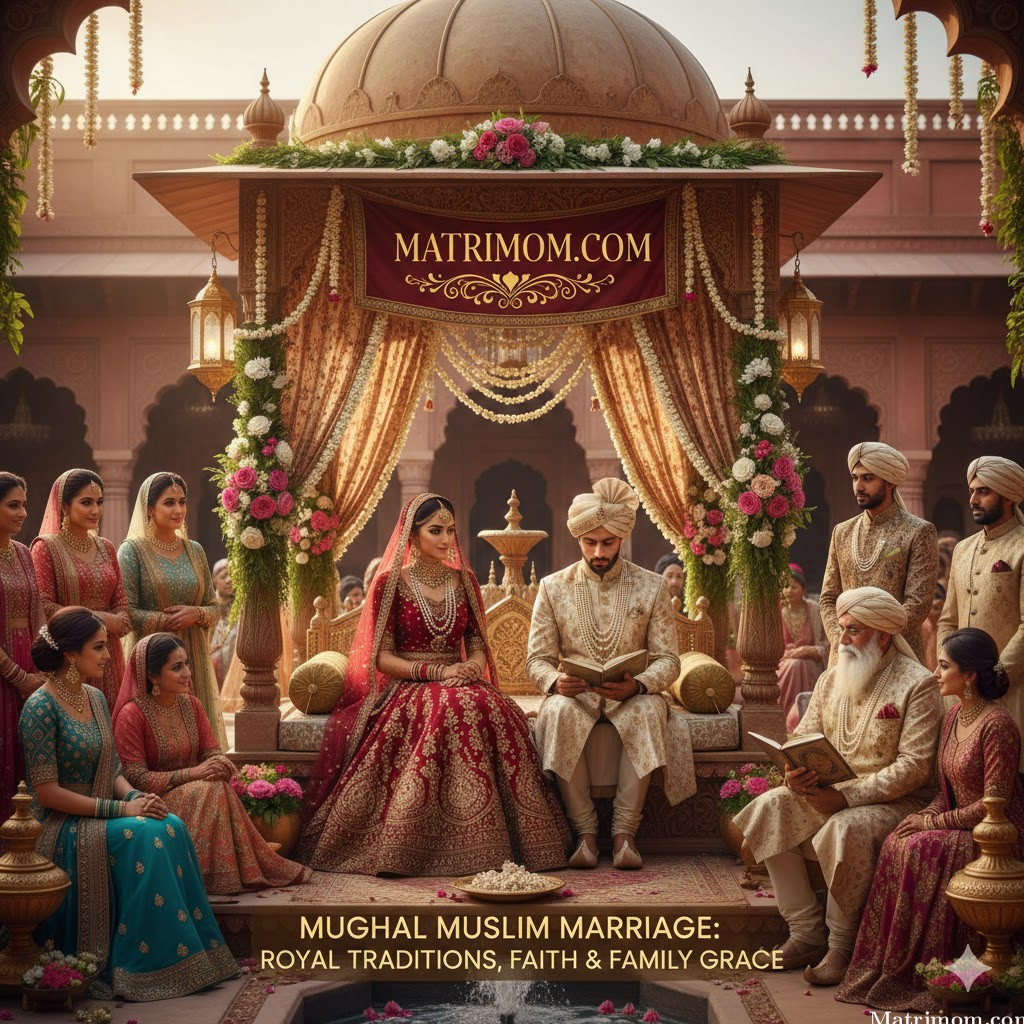
Mughal Muslim marriages beautifully combine Islamic values, family traditions, elegance, and cultural grace. Known for their strong respect for family bonds, dignity, hospitality, and refined traditions, Mughal families often value marriages built on compatibility, character, emotional understanding, and mutual respect. Alongside cultural richness, faith and family harmony remain central to the marriage journey.
At matrimom.com, we help Mughal Muslim individuals and families connect with compatible partners who appreciate tradition, emotional maturity, and long-term commitment rooted in Islamic values.
⭐ 1. Importance of Marriage in Mughal Muslim Culture
Marriage is viewed as a respected and meaningful union between two families.
It is valued as:
✔ A sacred Islamic commitment
✔ A bond built on trust and respect
✔ A relationship rooted in family harmony
✔ A partnership based on emotional understanding
✔ A foundation for a stable future
Marriage is celebrated with dignity, blessings, and family involvement.
⭐ 2. Strong Emphasis on Family Values
Mughal Muslim families often maintain close family relationships and cultural traditions.
Families commonly value:
✔ Respect for elders
✔ Family reputation and dignity
✔ Good upbringing and manners
✔ Emotional maturity
✔ Loyalty and responsibility
✔ Strong cultural identity
Family unity plays an important role in maintaining harmony after marriage.
⭐ 3. Importance of Compatibility in Marriage
Compatibility is considered essential for a peaceful and successful relationship.
Families often look for alignment in:
✔ Religious values
✔ Lifestyle preferences
✔ Family background
✔ Education and ambitions
✔ Emotional understanding
✔ Communication style
✔ Long-term goals
Strong compatibility supports emotional balance and stability.
⭐ 4. Simplicity and Elegance in Nikah
Although Mughal culture is associated with elegance and tradition, Islamic values of simplicity and dignity remain important.
Common marriage practices include:
✔ Respectful Nikah ceremony
✔ Presence of family and witnesses
✔ Recitation of Quran and duas
✔ Traditional cultural celebrations
✔ Graceful hospitality
✔ Focus on blessings and togetherness
The goal is to celebrate marriage respectfully while maintaining Islamic values.
⭐ 5. Respect and Communication Strengthen Relationships
Healthy marriages grow through understanding and respectful communication.
Strong couples practice:
✔ Honest conversations
✔ Emotional patience
✔ Mutual respect
✔ Support during difficulties
✔ Calm conflict resolution
✔ Appreciation for each other
Respectful communication strengthens emotional connection and trust.
⭐ 6. Cultural Traditions Bring Families Together
Mughal marriages often include warm family traditions and joyful gatherings.
Traditions may include:
✔ Mehndi celebrations
✔ Family dinners and gatherings
✔ Traditional attire and customs
✔ Blessings from elders
✔ Shared cultural rituals
These traditions create emotional bonding and family closeness.
⭐ 7. Emotional Support Creates Lasting Marriages
Long-lasting relationships require emotional understanding and support.
Healthy couples often:
✔ Encourage each other’s growth
✔ Stay emotionally supportive
✔ Share responsibilities
✔ Build trust gradually
✔ Maintain loyalty and understanding
Emotional support creates stability and peace in marriage.
⭐ 8. The Role of Faith in Marriage
Islamic principles remain central in Mughal Muslim marriages.
Faith encourages:
✔ Kindness and compassion
✔ Honesty and loyalty
✔ Patience during challenges
✔ Respect for spouse and family
✔ Responsibility and fairness
✔ Spiritual balance in family life
Faith helps strengthen emotional and family harmony.
⭐ 9. How matrimom.com Supports Mughal Muslim Families
matrimom.com helps Mughal Muslim families find compatible partners through:
✔ Verified profiles
✔ Community-based matchmaking
✔ Compatibility-focused search
✔ Privacy and safety
✔ Family-oriented communication
✔ Islamic value-based matching
✔ Long-term relationship focus
This helps families search confidently for meaningful and respectful relationships.
🌟 Conclusion: Marriage Built on Tradition, Respect & Harmony
Mughal Muslim marriages beautifully blend Islamic faith, family grace, emotional understanding, and cultural traditions. When couples build relationships through compatibility, respect, honesty, and emotional support, they create peaceful and long-lasting marriages filled with dignity and harmony.
At matrimom.com, we help Mughal Muslim individuals and families connect with compatible partners who value faith, family traditions, emotional maturity, and meaningful lifelong commitment.
Pro Tip:
A successful marriage is not built only on tradition or attraction — it grows through respect, communication, emotional support, and shared values.
Q: What is the importance of marriage in Mughal Muslim culture?
A: Marriage is viewed as a respected Islamic partnership built on family harmony, dignity, trust, and emotional understanding.
Q: What qualities do Mughal Muslim families value in a spouse?
A: Families often value good character, respect, emotional maturity, family values, education, and compatibility.
Q: Why is compatibility important in Mughal Muslim marriages?
A: Compatibility helps couples build stable relationships through shared values, communication, and emotional balance.
Q: Are Mughal Muslim marriages culturally traditional?
A: Yes. Many families celebrate marriages with traditional customs, family gatherings, and respectful cultural practices.
Q: How does faith influence Mughal Muslim marriages?
A: Islamic values encourage kindness, patience, loyalty, fairness, and emotional harmony in marriage.
Q: Why is emotional support important in marriage?
A: Emotional support strengthens trust, communication, stability, and long-term relationship happiness.
Q: How does matrimom.com help Mughal Muslim families find partners?
A: matrimom.com offers verified profiles, compatibility-focused matchmaking, community-based search, and family-oriented partner matching experiences.
👋 Hi! What’s your name?