

Aauthor Name : Mohd Zaki, Published on : Wednesday 13th of May 2026 04:59:38 PM
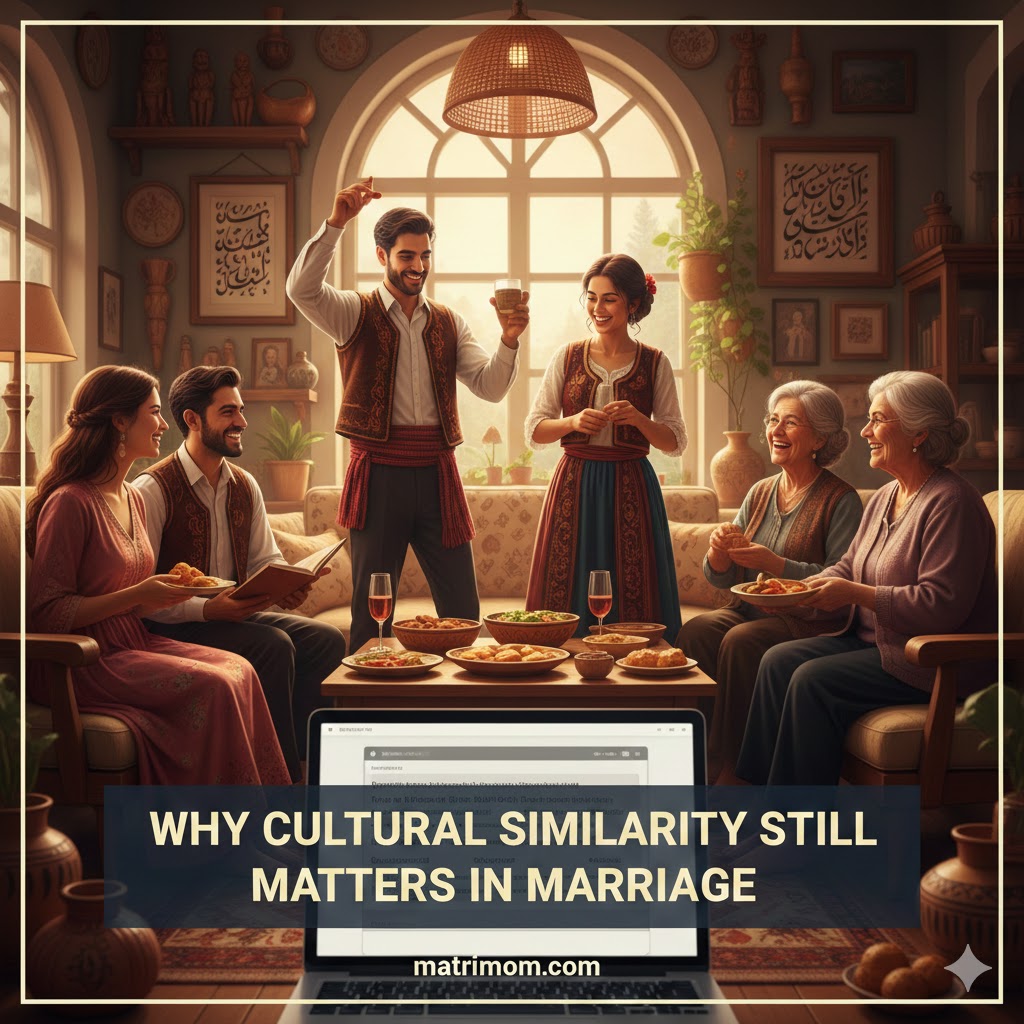
In today’s modern world, people are more open-minded than ever — choosing partners across regions, lifestyles, and backgrounds. Yet, despite changing relationship trends, cultural similarity still plays an important role in building comfort, understanding, and long-term harmony in marriage.
Culture influences the way people think, communicate, celebrate traditions, handle responsibilities, and maintain family relationships. When partners share similar cultural values, relationships often feel more natural, stable, and emotionally secure.
At matrimom.com, we help individuals find partners whose cultural values and relationship expectations align closely with their own — creating stronger compatibility and lasting happiness.
Cultural similarity does not necessarily mean both partners must come from the exact same community or region. Instead, it refers to shared understanding in areas such as:
These similarities create emotional comfort and reduce confusion in everyday married life.
Shared cultural values often help couples adjust more smoothly after marriage.
Some major benefits include:
When couples naturally understand each other’s environment and upbringing, the relationship becomes easier to manage with mutual respect.
Relationships become stronger when both partners share core values.
These may include:
Even if personalities differ, shared values help couples move in the same direction during important life decisions.
Marriage often brings two families together, not just two individuals.
When families share similar traditions and expectations:
This harmony between families creates a more peaceful environment for the couple as well.
Before choosing a life partner, it is helpful to understand your own cultural priorities.
Ask yourself:
Self-awareness helps you choose a partner with greater clarity and confidence.
Sharing cultural values does not mean couples must be identical in every way.
Healthy relationships still allow:
Cultural similarity simply creates a stable base where understanding becomes easier and emotional connection grows naturally.
Today’s successful couples often blend tradition with modern thinking.
Helpful ways to maintain balance include:
Every family has unique customs and habits. Respect creates stronger bonding.
Discuss traditions, responsibilities, and lifestyle preferences openly before marriage.
Healthy marriages grow through adjustment and understanding — not rigid thinking.
Participating in each other’s traditions strengthens emotional connection and family harmony.
Long-term compatibility matters more than superficial differences.
One of the biggest advantages of cultural similarity is emotional comfort.
Couples often feel:
This natural familiarity helps relationships feel peaceful and emotionally secure.
Love, trust, and communication are essential in every marriage — but cultural similarity adds an extra layer of comfort, stability, and understanding. Shared traditions, values, and family expectations often make relationships smoother and more emotionally fulfilling.
At matrimom.com, we help individuals find compatible partners who share similar cultural values, relationship goals, and family expectations — creating marriages built on harmony, respect, and long-term happiness.
Cultural similarity helps couples share common values, traditions, communication styles, and family expectations, creating smoother understanding and stronger long-term compatibility.
No relationship succeeds based on culture alone. Mutual respect, emotional maturity, trust, and communication are equally important for a healthy marriage.
Yes. Many intercultural marriages succeed beautifully when both partners communicate openly, respect differences, and support each other’s backgrounds.
Shared traditions, language, and expectations often make communication easier and create stronger comfort between families after marriage.
Couples should discuss traditions, family roles, lifestyle expectations, religious practices, food habits, and long-term values before marriage.
matrimom.com helps individuals connect with partners who share similar cultural values, family expectations, and relationship goals for stronger long-term compatibility.
👋 Hi! What’s your name?